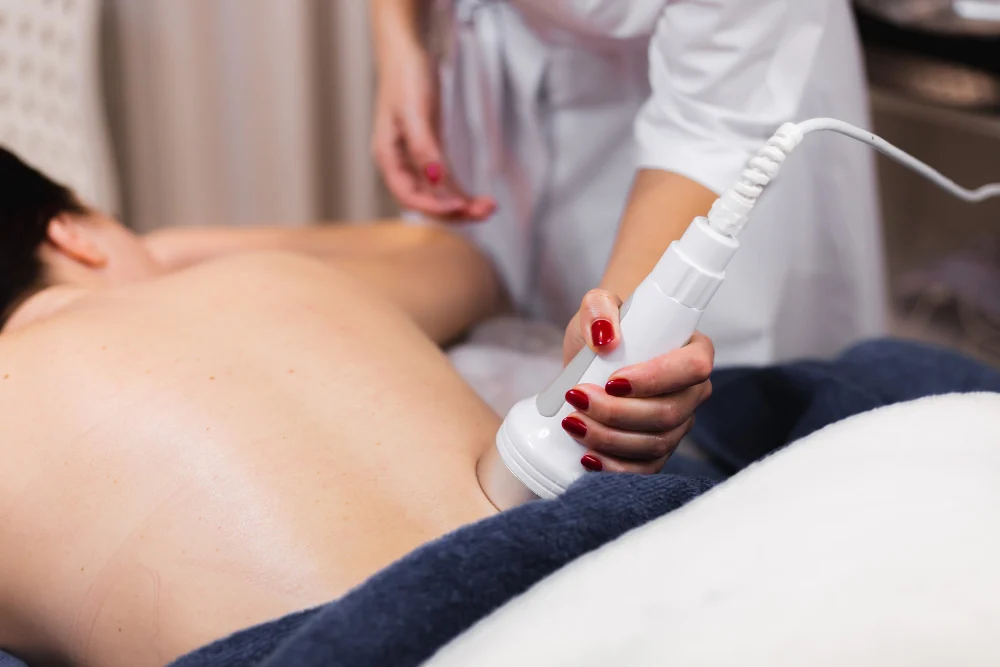
Losing a significant amount of weight changes the number on the scale faster than it changes what the skin does about it. Skin that’s been stretched for months or years doesn’t always spring back on its own timeline, and a lot of people who’ve worked hard for that weight loss end up frustrated by loose skin that photos and clothes still hide, even after all the progress underneath it. RF body vacuum therapy gets asked about constantly for exactly this reason, and the honest answer is more nuanced than either “it works” or “it doesn’t”.
What the treatment is actually doing
For moderate to mild skin laxity, or the loose skin that can be seen on the skin after a moderate amount of weight loss, this type of treatment can have a real role and is supported by evidence. Most people who complete a full course of treatments notice a tightening of the skin and increased firmness over the course of a few months after controlled RF heating, and RF treatment can stimulate collagen remodelling and new collagen production. It’s a real, but not a spectacular, improvement.
What it can realistically help with
For mild to moderate skin laxity, the kind that shows up as slightly looser skin on the abdomen, arms, or thighs after a moderate weight loss, this type of treatment has a real, evidence-supported role. Collagen production does increase in response to controlled RF heating, and most people who stick with a full course of sessions notice the treated skin feels firmer and looks somewhat tighter over the following months. It’s a genuine, if modest, improvement, not a dramatic one.
Where it hits a real limit
Excessive skin, often left after losing a large amount of weight. If excess skin is large in size, especially following significant weight loss or bariatric surgery, non-invasive tightening may not be sufficient to reduce the amount of excess skin. After such a long period of time and skin stretching, the elastic fibres themselves will usually be damaged, and heat stimulation will not be enough to undo the damage. RF or vacuum therapy is not able to remove and/or tighten tissue. When it comes to a tummy tuck or body lift, the next natural step is a plastic surgery consultation if you have true excess, not just a little, but a lot, with skin folds that dangle. Non-invasive treatments don’t remove as much excess as a tummy tuck or abdominal tuck does.
What an honest course of treatment actually looks like
This isn’t a quick one-shot solution. Any improvement is likely to be experienced after multiple treatments, usually between 6 and 10 treatments on a weekly basis, with occasional maintenance treatments to maintain the improvement. The results are not immediate after just one visit; rather, they gradually develop over weeks or months as collagen remodels and vary from person to person depending on their skin elasticity, amount of weight loss, and the duration of the skin’s previous being pulled. Two patients who lose the same amount of weight may experience quite a bit of variance in the outcome of the treatment programme.
Who should think twice or check with a doctor first
RF and vacuum treatments aren’t right for everyone. Pregnancy, certain skin infections or open wounds in the treatment area, and some autoimmune or connective tissue conditions are common reasons a provider might recommend against it or want medical clearance first. People with pacemakers or certain metal implants near the treatment area should flag that during a consultation too, since RF energy and implanted devices don’t always mix safely. A reputable provider will ask about your health history before your first session, not after, and that conversation matters more than the treatment itself if something on that list applies to you.
Setting expectations before you book
If you’re dealing with mild to moderate skin laxity and you’re looking for a non-invasive way to support your skin’s own tightening process, this is worth a real conversation with a provider who’ll assess your specific skin and set expectations honestly, without promising a specific number of inches or a surgical-level result. If your excess skin is more significant, it’s worth having that conversation alongside a surgical consultation, not instead of one, since the two aren’t competing for the same problem.
You can read more about the LED RF body vacuum therapy treatment itself and what a session involves before deciding whether it fits what you’re hoping to achieve. The most useful next step either way is an in-person consultation, where an actual assessment of your skin can tell you far more than any general guide can about what result is realistic for you specifically.